There is no innocent image. Before a picture reaches a painter it has already been named, circulated, cropped, priced and remembered. This is the productive contradiction inside Zero Degree of Image Vol. 1: Wu Di, the first exhibition in a long-term project initiated by Shanghai’s START Museum. “Zero degree” promises a cleared field. Wu Di’s work brings the dirt back in.
The exhibition is Wu’s first large-scale museum presentation and follows more than two decades of work across oil painting, drawing, collage, sculpture, installation, sound, light and shadow. She was born in Beijing in 1979 and studied mural painting at the Central Academy of Fine Arts, graduating in 2002. That training matters. A mural assumes that an image belongs to a wall, an audience and a public order; Wu has spent much of her subsequent practice unsettling precisely those relationships.
Her source material moves freely between classical Chinese and European art, news photography and the visual debris of everyday communication. Reproductions are cut and placed on wooden panels. Saturated colour sits beside delicate drawing. Large oils are handled with the provisional touch of a sketch. The exhibition describes this process as removing images from their cultural and historical contexts so that visual structure and colour can begin again. Yet removal is never clean. The copied classical figure retains the authority of the museum even after its background disappears. A news image keeps the pressure of the event that first made it circulate. Colour carries the memory of advertising whether or not it is selling anything.
This residue is not a weakness in Wu’s work. It is where the work becomes interesting. Her images do not achieve neutrality; they expose neutrality as an attractive fiction. A rough surface interrupts the promise of a sacred aura. Repeated layers of colour make power look less like a stable possession than something applied, covered and applied again. What seems formally free is also crowded by inheritance.
The project’s title inevitably recalls Roland Barthes’s Writing Degree Zero, where “zero” did not mean the absence of history so much as the desire for a form of writing that might escape inherited literary signs. That escape could only be temporary. Wu’s practice makes the same limit visible in painting. Each attempt to release an image from one authority places it under another: composition, scale, taste, the artist’s hand, the museum wall.
START Museum presents Wu as a forceful female artist confronting systems of power, artistic sacredness and contemporary communication. The description is admiring, but broad enough to turn resistance into personality. “Fearless” is easier to display than a precise account of which authority a work disturbs and how. Gender matters here, especially in an art history that has repeatedly treated formal ambition as universal when practised by men and biographical when practised by women. But the work deserves more than the familiar institutional conversion of a woman artist into an emblem of courage.
The curatorial framework has a related problem. The museum calls Zero Degree of Image a long-term experimental project, with individual exhibitions, publications and visual and audio documents intended to trace how an artist’s practice is formed. That is a serious proposition. On the public exhibition page, however, no individual curator or research author is credited. The institution speaks in a collective voice while the method remains indistinct. If this is research rather than a sequence of solo exhibitions under one title, the choices need to be legible: why Wu is the first case, which works establish the argument, and what “zero degree” allows the museum to see that another framework would not.
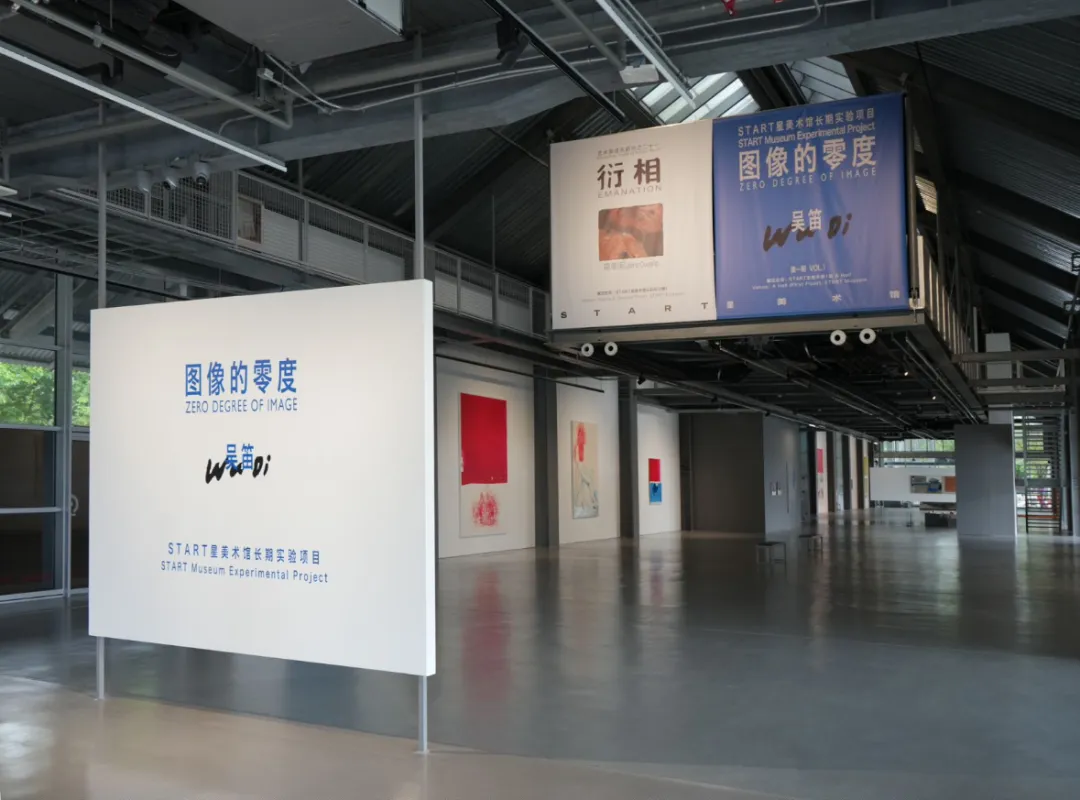
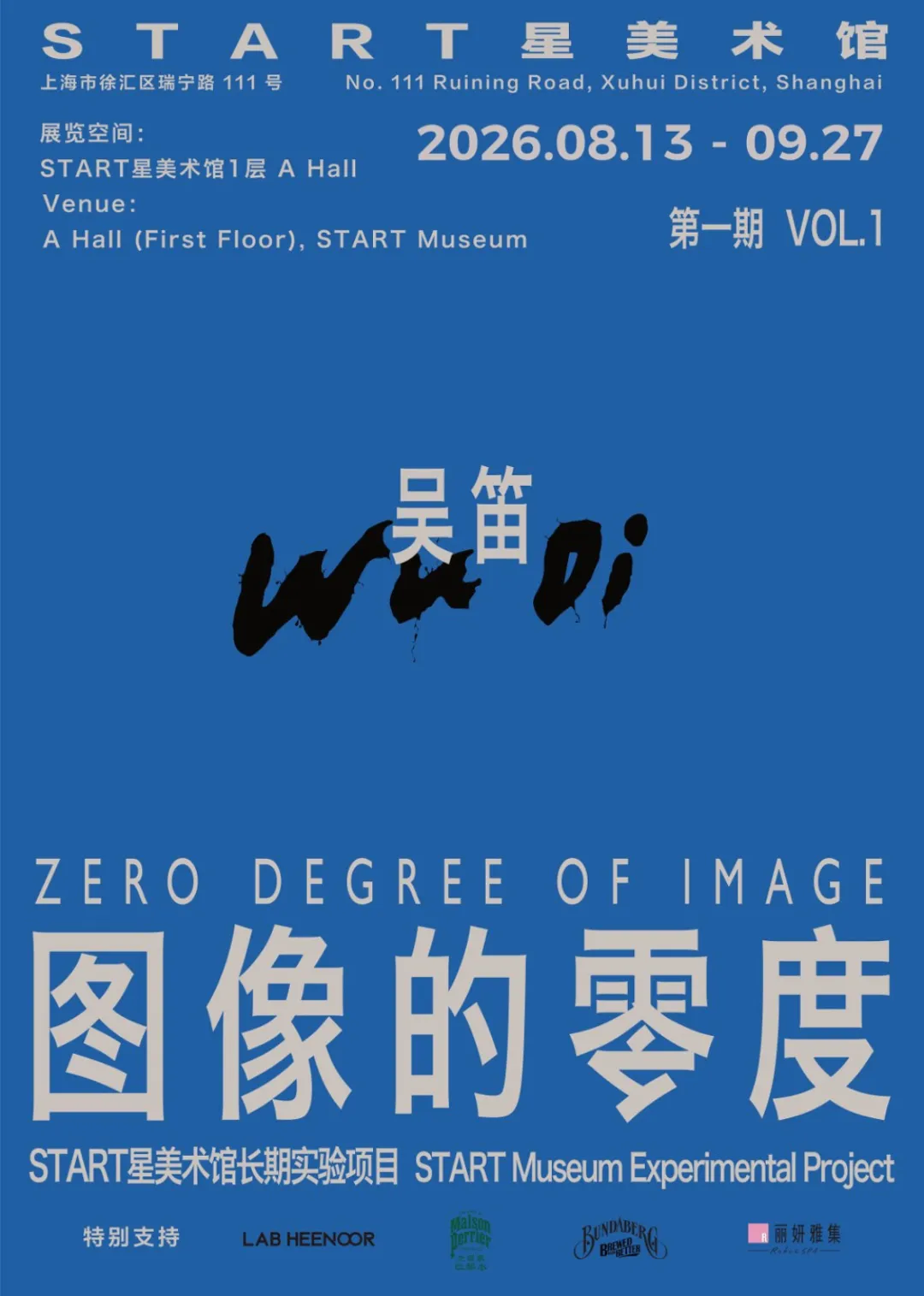
The installation view suggests a further tension. The exhibition opens inside a large, repurposed industrial building designed to make its own scale felt. White partitions create a temporary interior, while exposed beams, rails and the long polished floor remain visible above and around them. Wu’s work is asked to contest the authority of images in a space whose architectural authority is difficult to ignore. The neat blue identity of the project—part laboratory label, part institutional brand—adds another layer to the very circulation system the exhibition claims to examine.
Perhaps, then, the best reading begins by refusing the title’s promise. Wu’s paintings and collages do not return us to a visual ground zero. They show that every ground has already been used. Images remember their former jobs, even when badly; they carry prestige, violence, pleasure and embarrassment into their next arrangement. Wu does not purify that traffic. She lets it remain impure enough to see.
Editorial note: This critical desk review was written from START Museum’s exhibition materials, its earlier artist research on Wu Di, and official installation documentation published by the Shanghai Municipal Administration of Culture and Tourism. It does not claim first-hand attendance.