Exhibition
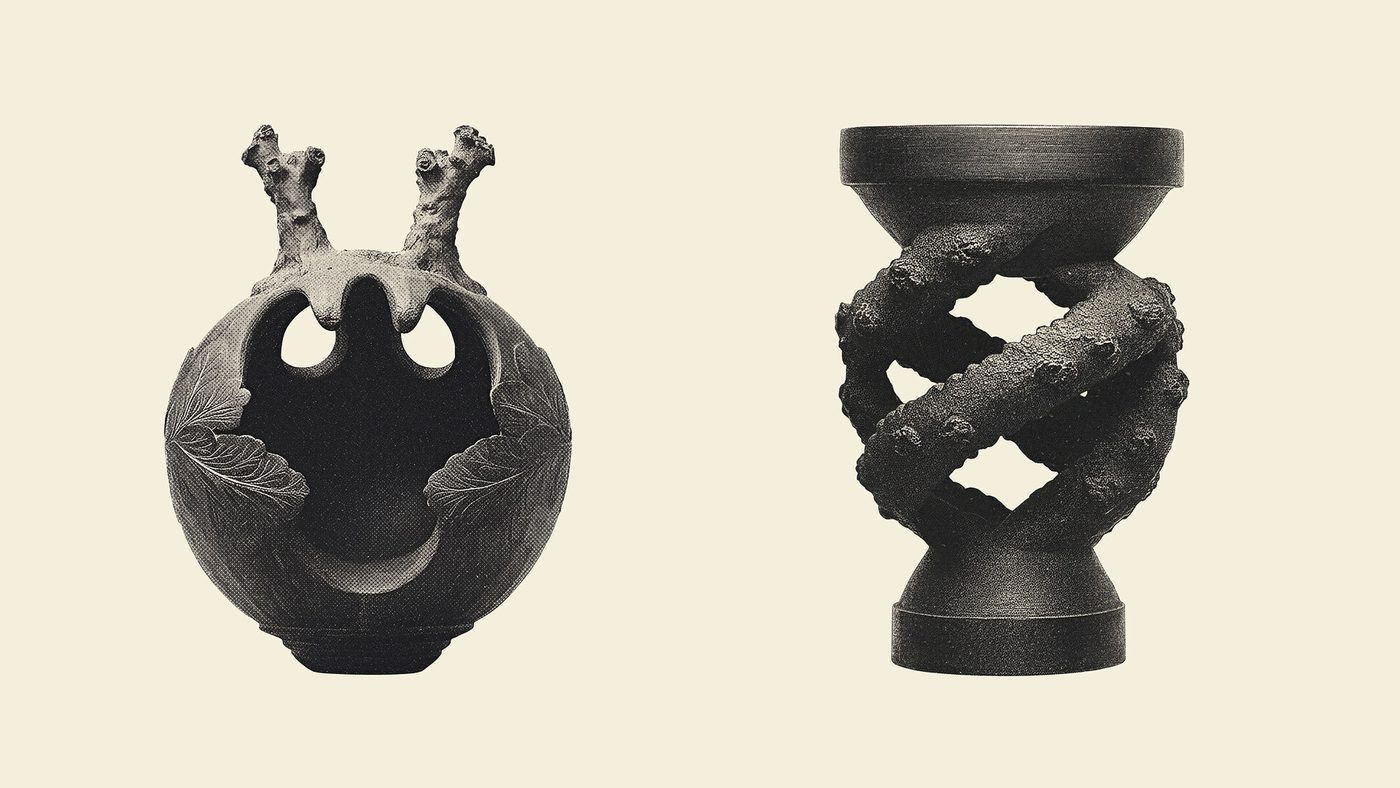
In his first solo museum exhibition, Olalekan Jeyifous imagines remnants recovered from a river enclave outside fixed time. The Mississippi is not scenery but an archive: it keeps ecological, industrial and spiritual histories that official institutions have separated. Milled-wood reliefs, carved objects, nets, bindings, water and machinery assemble that archive through fragments rather than a continuous story.
The refusal of both utopia and dystopia is important. Speculative art can make environmental crisis visually seductive while postponing political responsibility into fiction. Hydricosmic Litanies instead appears to use world-building as a method for returning to extraction, enslavement and infrastructure—histories already embedded in the river.
A speculative archive is valuable not because it escapes history, but because it changes which histories can be held together.
Curatorial approach
Curator Taylor Jasper frames the installation through flow, accumulation and return. This avoids forcing Jeyifous’s objects into an archaeological timeline and allows the exhibition to behave like a river system. Short linked passages replace a single bounded narrative; sound and material recurrence guide interpretation.
The framing also carries a responsibility. The project brings African diasporic cosmologies into contact with Dakota and Ojibwe water knowledge. “Contact” cannot be treated as a poetic resource alone, especially inside a Minnesota institution. A rigorous presentation must make visible the relationships, consultation and local histories through which this meeting is constructed. Otherwise, curatorial fluidity risks smoothing distinct sovereignties into an attractive language of interconnectedness.
Artist
Jeyifous works between art, architecture and design, and that training gives his speculation structural force. The reliquary is not merely a mysterious prop: it proposes that infrastructure has ritual meaning and that industrial systems organise belief as much as movement. Nets can signal nourishment and captivity; carved surfaces can hold both invented cosmology and material extraction.
The project’s power lies in refusing the isolated art object. Each fragment belongs to a larger hydrological and historical system. Its critical limit will depend on specificity: whether the Niger-to-Mississippi relation remains accountable to the peoples and places it invokes, or becomes a broad metaphor for flow. The exhibition asks the right question. Water connects histories, but connection does not make those histories interchangeable.
Editorial note: This is a critical desk review based on Walker Art Center’s exhibition and programme materials. It does not claim first-hand attendance.