Exhibition
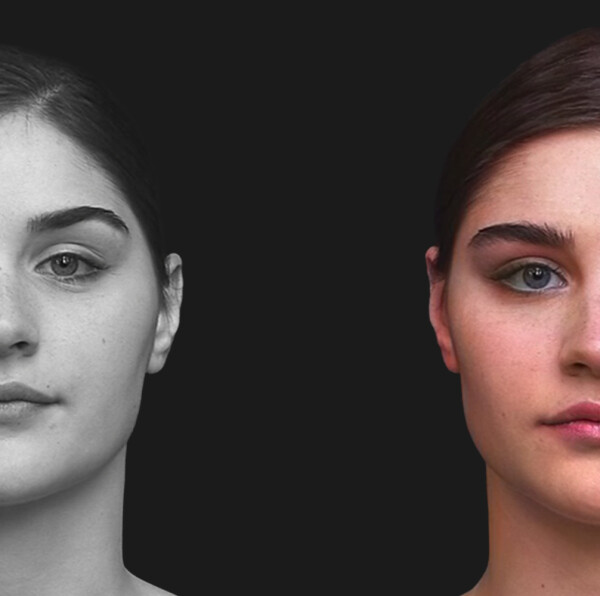
The first institutional solo exhibition of Carsten Höller in China is organised as a split. Visitors are randomly directed through one of two entrances and encounter parallel versions of the same environment: one in colour, the other in black and white. “Two” is therefore not merely a title or a collection of doubles. It is the operating rule through which the institution distributes experience.
This device produces a useful frustration. No single visitor possesses the whole exhibition, and comparison depends on testimony, memory or a return visit. Yet the structure also risks converting doubt into a predictable effect. When uncertainty is announced in advance as the exhibition’s product, disorientation can become as managed as a queue.
The exhibition offers doubt as freedom, while controlling nearly every condition through which that doubt is encountered.
Curatorial approach
Curators Philip Tinari and Jiashu Zou describe the Great Hall as a “Laboratory of Doubt.” Their strongest decision is to treat the exhibition itself as one extended work rather than a neutral container for discrete objects. The split entrance, corresponding environments and public programme—organised around play, non-human life and embodied perception—give Höller’s recurring concerns an architectural coherence.
But the laboratory metaphor deserves pressure. A laboratory is not simply a place of experiment; it defines who designs the experiment, who becomes its subject and which outcomes are legible. The most pointed example is the overnight experience for Two Roaming Beds (Grey), priced by UCCA at RMB 3,888 per night. Participation shifts from a collective gallery condition to exclusive access. Doubt becomes hospitality, and the museum’s experiment reveals a hierarchy between ordinary visitors and those able to purchase private immersion.
Artist
Höller’s scientific training remains visible in the clarity of his protocols. Works such as Beijing Dots, which tracks and rewards or penalises social behaviour through moving coloured light, make participation less innocent than the language of “play” suggests. The visitor is not only liberated from habit; they are measured, sorted and made responsive to a system.
This is where the work is most persuasive. Höller’s environments resemble the contemporary city—sensor-rich, gamified and apparently personalised—more than they resemble free play. The exhibition succeeds when pleasure and control cannot be separated. It weakens when institutional language celebrates uncertainty without acknowledging how thoroughly the experience has been authored and monetised.
Editorial note: This is a critical desk review based on UCCA’s exhibition archive, installation documentation and public programme. It does not claim first-hand attendance.